Ideje 109 Frequency Of Hydrogen Atom
Ideje 109 Frequency Of Hydrogen Atom. Although there may not seem to be a lot of loose hydrogen atoms about (there's perhaps one per cubic centimeter of interstellar space), the interstellar medium contains … The hydrogen line (1420.40575 mhz) is the precession frequency of neutral hydrogen atoms, the most abundant substance in space. E=hf where h=3.99×10⁻¹³kjsmol is planck's constant, in units consistent with our earlier choice. It happens to fall in the quietest part of the radio spectrum, what's known as the microwave window.

Tady How Do You Calculate The Ionization Energy Of A Hydrogen Atom In Its Ground State Socratic
For ε = 78.4, for example, the frequency changes by 214 cm −1 / (v/å) and for ε = 1 it changes by 49 cm −1 / (v/å). E=hf where h=3.99×10⁻¹³kjsmol is planck's constant, in units consistent with our earlier choice. To convert to frequency, we apply planck's relation: Although there may not seem to be a lot of loose hydrogen atoms about (there's perhaps one per cubic centimeter of interstellar space), the interstellar medium contains …To convert to frequency, we apply planck's relation:
12.07.2021 · this change in the energy of the atom equals the energy carried off by the photon that is released. Let's first calculate the energy of the hydrogen atom using the given bohr equation: The hydrogen line (1420.40575 mhz) is the precession frequency of neutral hydrogen atoms, the most abundant substance in space. It happens to fall in the quietest part of the radio spectrum, what's known as the microwave window. For ε = 78.4, for example, the frequency changes by 214 cm −1 / (v/å) and for ε = 1 it changes by 49 cm −1 / (v/å). 09.08.2017 · we will calculate the frequency of the light emitted by a hydrogen atom from the energy using the following equation: By measuring the frequency of the red light, you can work out its energy.

By measuring the frequency of the red light, you can work out its energy. 09.08.2017 · we will calculate the frequency of the light emitted by a hydrogen atom from the energy using the following equation:. 09.08.2017 · we will calculate the frequency of the light emitted by a hydrogen atom from the energy using the following equation:

It happens to fall in the quietest part of the radio spectrum, what's known as the microwave window. N i = initial energy level n f = final energy level E=hf where h=3.99×10⁻¹³kjsmol is planck's constant, in units consistent with our earlier choice. 12.07.2021 · this change in the energy of the atom equals the energy carried off by the photon that is released. Although there may not seem to be a lot of loose hydrogen atoms about (there's perhaps one per cubic centimeter of interstellar space), the interstellar medium contains … The hydrogen line (1420.40575 mhz) is the precession frequency of neutral hydrogen atoms, the most abundant substance in space. Let's first calculate the energy of the hydrogen atom using the given bohr equation: By measuring the frequency of the red light, you can work out its energy.. 12.07.2021 · this change in the energy of the atom equals the energy carried off by the photon that is released.

Although there may not seem to be a lot of loose hydrogen atoms about (there's perhaps one per cubic centimeter of interstellar space), the interstellar medium contains … E=hf where h=3.99×10⁻¹³kjsmol is planck's constant, in units consistent with our earlier choice. It happens to fall in the quietest part of the radio spectrum, what's known as the microwave window. N i = initial energy level n f = final energy level By measuring the frequency of the red light, you can work out its energy. 09.08.2017 · we will calculate the frequency of the light emitted by a hydrogen atom from the energy using the following equation: To convert to frequency, we apply planck's relation: Although there may not seem to be a lot of loose hydrogen atoms about (there's perhaps one per cubic centimeter of interstellar space), the interstellar medium contains … Let's first calculate the energy of the hydrogen atom using the given bohr equation: For ε = 78.4, for example, the frequency changes by 214 cm −1 / (v/å) and for ε = 1 it changes by 49 cm −1 / (v/å). The hydrogen line (1420.40575 mhz) is the precession frequency of neutral hydrogen atoms, the most abundant substance in space.. Let's first calculate the energy of the hydrogen atom using the given bohr equation:

12.07.2021 · this change in the energy of the atom equals the energy carried off by the photon that is released. By measuring the frequency of the red light, you can work out its energy. For ε = 78.4, for example, the frequency changes by 214 cm −1 / (v/å) and for ε = 1 it changes by 49 cm −1 / (v/å). To convert to frequency, we apply planck's relation: N i = initial energy level n f = final energy level It happens to fall in the quietest part of the radio spectrum, what's known as the microwave window. 12.07.2021 · this change in the energy of the atom equals the energy carried off by the photon that is released. 09.08.2017 · we will calculate the frequency of the light emitted by a hydrogen atom from the energy using the following equation: Let's first calculate the energy of the hydrogen atom using the given bohr equation:

For ε = 78.4, for example, the frequency changes by 214 cm −1 / (v/å) and for ε = 1 it changes by 49 cm −1 / (v/å). Let's first calculate the energy of the hydrogen atom using the given bohr equation: To convert to frequency, we apply planck's relation: It happens to fall in the quietest part of the radio spectrum, what's known as the microwave window. E=hf where h=3.99×10⁻¹³kjsmol is planck's constant, in units consistent with our earlier choice. N i = initial energy level n f = final energy level The hydrogen line (1420.40575 mhz) is the precession frequency of neutral hydrogen atoms, the most abundant substance in space. 09.08.2017 · we will calculate the frequency of the light emitted by a hydrogen atom from the energy using the following equation: Although there may not seem to be a lot of loose hydrogen atoms about (there's perhaps one per cubic centimeter of interstellar space), the interstellar medium contains … For ε = 78.4, for example, the frequency changes by 214 cm −1 / (v/å) and for ε = 1 it changes by 49 cm −1 / (v/å). By measuring the frequency of the red light, you can work out its energy. It happens to fall in the quietest part of the radio spectrum, what's known as the microwave window.

By measuring the frequency of the red light, you can work out its energy. .. For ε = 78.4, for example, the frequency changes by 214 cm −1 / (v/å) and for ε = 1 it changes by 49 cm −1 / (v/å).

E=hf where h=3.99×10⁻¹³kjsmol is planck's constant, in units consistent with our earlier choice. E=hf where h=3.99×10⁻¹³kjsmol is planck's constant, in units consistent with our earlier choice. The hydrogen line (1420.40575 mhz) is the precession frequency of neutral hydrogen atoms, the most abundant substance in space. 09.08.2017 · we will calculate the frequency of the light emitted by a hydrogen atom from the energy using the following equation: To convert to frequency, we apply planck's relation: By measuring the frequency of the red light, you can work out its energy. Although there may not seem to be a lot of loose hydrogen atoms about (there's perhaps one per cubic centimeter of interstellar space), the interstellar medium contains … N i = initial energy level n f = final energy level For ε = 78.4, for example, the frequency changes by 214 cm −1 / (v/å) and for ε = 1 it changes by 49 cm −1 / (v/å). It happens to fall in the quietest part of the radio spectrum, what's known as the microwave window. 12.07.2021 · this change in the energy of the atom equals the energy carried off by the photon that is released. 09.08.2017 · we will calculate the frequency of the light emitted by a hydrogen atom from the energy using the following equation:

E=hf where h=3.99×10⁻¹³kjsmol is planck's constant, in units consistent with our earlier choice. The hydrogen line (1420.40575 mhz) is the precession frequency of neutral hydrogen atoms, the most abundant substance in space. Let's first calculate the energy of the hydrogen atom using the given bohr equation: 12.07.2021 · this change in the energy of the atom equals the energy carried off by the photon that is released... 12.07.2021 · this change in the energy of the atom equals the energy carried off by the photon that is released.

12.07.2021 · this change in the energy of the atom equals the energy carried off by the photon that is released.. E=hf where h=3.99×10⁻¹³kjsmol is planck's constant, in units consistent with our earlier choice. The hydrogen line (1420.40575 mhz) is the precession frequency of neutral hydrogen atoms, the most abundant substance in space. It happens to fall in the quietest part of the radio spectrum, what's known as the microwave window. Although there may not seem to be a lot of loose hydrogen atoms about (there's perhaps one per cubic centimeter of interstellar space), the interstellar medium contains ….. Let's first calculate the energy of the hydrogen atom using the given bohr equation:

Although there may not seem to be a lot of loose hydrogen atoms about (there's perhaps one per cubic centimeter of interstellar space), the interstellar medium contains … By measuring the frequency of the red light, you can work out its energy. To convert to frequency, we apply planck's relation: Let's first calculate the energy of the hydrogen atom using the given bohr equation: E=hf where h=3.99×10⁻¹³kjsmol is planck's constant, in units consistent with our earlier choice. The hydrogen line (1420.40575 mhz) is the precession frequency of neutral hydrogen atoms, the most abundant substance in space.
To convert to frequency, we apply planck's relation:.. Let's first calculate the energy of the hydrogen atom using the given bohr equation: The hydrogen line (1420.40575 mhz) is the precession frequency of neutral hydrogen atoms, the most abundant substance in space. N i = initial energy level n f = final energy level 12.07.2021 · this change in the energy of the atom equals the energy carried off by the photon that is released. For ε = 78.4, for example, the frequency changes by 214 cm −1 / (v/å) and for ε = 1 it changes by 49 cm −1 / (v/å). N i = initial energy level n f = final energy level

Let's first calculate the energy of the hydrogen atom using the given bohr equation: It happens to fall in the quietest part of the radio spectrum, what's known as the microwave window. For ε = 78.4, for example, the frequency changes by 214 cm −1 / (v/å) and for ε = 1 it changes by 49 cm −1 / (v/å). The hydrogen line (1420.40575 mhz) is the precession frequency of neutral hydrogen atoms, the most abundant substance in space. To convert to frequency, we apply planck's relation: N i = initial energy level n f = final energy level To convert to frequency, we apply planck's relation:

12.07.2021 · this change in the energy of the atom equals the energy carried off by the photon that is released. . N i = initial energy level n f = final energy level

For ε = 78.4, for example, the frequency changes by 214 cm −1 / (v/å) and for ε = 1 it changes by 49 cm −1 / (v/å)... 09.08.2017 · we will calculate the frequency of the light emitted by a hydrogen atom from the energy using the following equation: The hydrogen line (1420.40575 mhz) is the precession frequency of neutral hydrogen atoms, the most abundant substance in space. 12.07.2021 · this change in the energy of the atom equals the energy carried off by the photon that is released. E=hf where h=3.99×10⁻¹³kjsmol is planck's constant, in units consistent with our earlier choice. It happens to fall in the quietest part of the radio spectrum, what's known as the microwave window. To convert to frequency, we apply planck's relation:. To convert to frequency, we apply planck's relation:

By measuring the frequency of the red light, you can work out its energy. 12.07.2021 · this change in the energy of the atom equals the energy carried off by the photon that is released. By measuring the frequency of the red light, you can work out its energy. 09.08.2017 · we will calculate the frequency of the light emitted by a hydrogen atom from the energy using the following equation: It happens to fall in the quietest part of the radio spectrum, what's known as the microwave window... By measuring the frequency of the red light, you can work out its energy.

The hydrogen line (1420.40575 mhz) is the precession frequency of neutral hydrogen atoms, the most abundant substance in space.. By measuring the frequency of the red light, you can work out its energy. 09.08.2017 · we will calculate the frequency of the light emitted by a hydrogen atom from the energy using the following equation: 12.07.2021 · this change in the energy of the atom equals the energy carried off by the photon that is released. Let's first calculate the energy of the hydrogen atom using the given bohr equation: To convert to frequency, we apply planck's relation:. Although there may not seem to be a lot of loose hydrogen atoms about (there's perhaps one per cubic centimeter of interstellar space), the interstellar medium contains …

09.08.2017 · we will calculate the frequency of the light emitted by a hydrogen atom from the energy using the following equation: It happens to fall in the quietest part of the radio spectrum, what's known as the microwave window. 09.08.2017 · we will calculate the frequency of the light emitted by a hydrogen atom from the energy using the following equation: For ε = 78.4, for example, the frequency changes by 214 cm −1 / (v/å) and for ε = 1 it changes by 49 cm −1 / (v/å). 12.07.2021 · this change in the energy of the atom equals the energy carried off by the photon that is released. Let's first calculate the energy of the hydrogen atom using the given bohr equation: Although there may not seem to be a lot of loose hydrogen atoms about (there's perhaps one per cubic centimeter of interstellar space), the interstellar medium contains … For ε = 78.4, for example, the frequency changes by 214 cm −1 / (v/å) and for ε = 1 it changes by 49 cm −1 / (v/å).

The hydrogen line (1420.40575 mhz) is the precession frequency of neutral hydrogen atoms, the most abundant substance in space.. To convert to frequency, we apply planck's relation: Although there may not seem to be a lot of loose hydrogen atoms about (there's perhaps one per cubic centimeter of interstellar space), the interstellar medium contains … E=hf where h=3.99×10⁻¹³kjsmol is planck's constant, in units consistent with our earlier choice. 12.07.2021 · this change in the energy of the atom equals the energy carried off by the photon that is released. By measuring the frequency of the red light, you can work out its energy. N i = initial energy level n f = final energy level For ε = 78.4, for example, the frequency changes by 214 cm −1 / (v/å) and for ε = 1 it changes by 49 cm −1 / (v/å). Let's first calculate the energy of the hydrogen atom using the given bohr equation: 09.08.2017 · we will calculate the frequency of the light emitted by a hydrogen atom from the energy using the following equation: It happens to fall in the quietest part of the radio spectrum, what's known as the microwave window.. It happens to fall in the quietest part of the radio spectrum, what's known as the microwave window.

Although there may not seem to be a lot of loose hydrogen atoms about (there's perhaps one per cubic centimeter of interstellar space), the interstellar medium contains … It happens to fall in the quietest part of the radio spectrum, what's known as the microwave window. 09.08.2017 · we will calculate the frequency of the light emitted by a hydrogen atom from the energy using the following equation: Although there may not seem to be a lot of loose hydrogen atoms about (there's perhaps one per cubic centimeter of interstellar space), the interstellar medium contains … 12.07.2021 · this change in the energy of the atom equals the energy carried off by the photon that is released. E=hf where h=3.99×10⁻¹³kjsmol is planck's constant, in units consistent with our earlier choice. N i = initial energy level n f = final energy level The hydrogen line (1420.40575 mhz) is the precession frequency of neutral hydrogen atoms, the most abundant substance in space. To convert to frequency, we apply planck's relation:.. Although there may not seem to be a lot of loose hydrogen atoms about (there's perhaps one per cubic centimeter of interstellar space), the interstellar medium contains …

By measuring the frequency of the red light, you can work out its energy. The hydrogen line (1420.40575 mhz) is the precession frequency of neutral hydrogen atoms, the most abundant substance in space. E=hf where h=3.99×10⁻¹³kjsmol is planck's constant, in units consistent with our earlier choice. 09.08.2017 · we will calculate the frequency of the light emitted by a hydrogen atom from the energy using the following equation: Although there may not seem to be a lot of loose hydrogen atoms about (there's perhaps one per cubic centimeter of interstellar space), the interstellar medium contains … For ε = 78.4, for example, the frequency changes by 214 cm −1 / (v/å) and for ε = 1 it changes by 49 cm −1 / (v/å). By measuring the frequency of the red light, you can work out its energy.

By measuring the frequency of the red light, you can work out its energy. By measuring the frequency of the red light, you can work out its energy.

To convert to frequency, we apply planck's relation: The hydrogen line (1420.40575 mhz) is the precession frequency of neutral hydrogen atoms, the most abundant substance in space. Let's first calculate the energy of the hydrogen atom using the given bohr equation: 09.08.2017 · we will calculate the frequency of the light emitted by a hydrogen atom from the energy using the following equation: To convert to frequency, we apply planck's relation: N i = initial energy level n f = final energy level 12.07.2021 · this change in the energy of the atom equals the energy carried off by the photon that is released. It happens to fall in the quietest part of the radio spectrum, what's known as the microwave window. E=hf where h=3.99×10⁻¹³kjsmol is planck's constant, in units consistent with our earlier choice. By measuring the frequency of the red light, you can work out its energy. Although there may not seem to be a lot of loose hydrogen atoms about (there's perhaps one per cubic centimeter of interstellar space), the interstellar medium contains …. E=hf where h=3.99×10⁻¹³kjsmol is planck's constant, in units consistent with our earlier choice.

09.08.2017 · we will calculate the frequency of the light emitted by a hydrogen atom from the energy using the following equation: For ε = 78.4, for example, the frequency changes by 214 cm −1 / (v/å) and for ε = 1 it changes by 49 cm −1 / (v/å). 12.07.2021 · this change in the energy of the atom equals the energy carried off by the photon that is released. It happens to fall in the quietest part of the radio spectrum, what's known as the microwave window. Let's first calculate the energy of the hydrogen atom using the given bohr equation: N i = initial energy level n f = final energy level Although there may not seem to be a lot of loose hydrogen atoms about (there's perhaps one per cubic centimeter of interstellar space), the interstellar medium contains … By measuring the frequency of the red light, you can work out its energy. The hydrogen line (1420.40575 mhz) is the precession frequency of neutral hydrogen atoms, the most abundant substance in space.. 12.07.2021 · this change in the energy of the atom equals the energy carried off by the photon that is released.

By measuring the frequency of the red light, you can work out its energy. By measuring the frequency of the red light, you can work out its energy. It happens to fall in the quietest part of the radio spectrum, what's known as the microwave window. 09.08.2017 · we will calculate the frequency of the light emitted by a hydrogen atom from the energy using the following equation: For ε = 78.4, for example, the frequency changes by 214 cm −1 / (v/å) and for ε = 1 it changes by 49 cm −1 / (v/å). Although there may not seem to be a lot of loose hydrogen atoms about (there's perhaps one per cubic centimeter of interstellar space), the interstellar medium contains … The hydrogen line (1420.40575 mhz) is the precession frequency of neutral hydrogen atoms, the most abundant substance in space.

It happens to fall in the quietest part of the radio spectrum, what's known as the microwave window.. To convert to frequency, we apply planck's relation: For ε = 78.4, for example, the frequency changes by 214 cm −1 / (v/å) and for ε = 1 it changes by 49 cm −1 / (v/å). Although there may not seem to be a lot of loose hydrogen atoms about (there's perhaps one per cubic centimeter of interstellar space), the interstellar medium contains … The hydrogen line (1420.40575 mhz) is the precession frequency of neutral hydrogen atoms, the most abundant substance in space. It happens to fall in the quietest part of the radio spectrum, what's known as the microwave window... 09.08.2017 · we will calculate the frequency of the light emitted by a hydrogen atom from the energy using the following equation:

09.08.2017 · we will calculate the frequency of the light emitted by a hydrogen atom from the energy using the following equation: 12.07.2021 · this change in the energy of the atom equals the energy carried off by the photon that is released. Although there may not seem to be a lot of loose hydrogen atoms about (there's perhaps one per cubic centimeter of interstellar space), the interstellar medium contains … 12.07.2021 · this change in the energy of the atom equals the energy carried off by the photon that is released.

E=hf where h=3.99×10⁻¹³kjsmol is planck's constant, in units consistent with our earlier choice. By measuring the frequency of the red light, you can work out its energy. 12.07.2021 · this change in the energy of the atom equals the energy carried off by the photon that is released. Although there may not seem to be a lot of loose hydrogen atoms about (there's perhaps one per cubic centimeter of interstellar space), the interstellar medium contains … To convert to frequency, we apply planck's relation: Let's first calculate the energy of the hydrogen atom using the given bohr equation:. Although there may not seem to be a lot of loose hydrogen atoms about (there's perhaps one per cubic centimeter of interstellar space), the interstellar medium contains …

By measuring the frequency of the red light, you can work out its energy... Although there may not seem to be a lot of loose hydrogen atoms about (there's perhaps one per cubic centimeter of interstellar space), the interstellar medium contains … N i = initial energy level n f = final energy level It happens to fall in the quietest part of the radio spectrum, what's known as the microwave window. For ε = 78.4, for example, the frequency changes by 214 cm −1 / (v/å) and for ε = 1 it changes by 49 cm −1 / (v/å). By measuring the frequency of the red light, you can work out its energy. Let's first calculate the energy of the hydrogen atom using the given bohr equation: To convert to frequency, we apply planck's relation: The hydrogen line (1420.40575 mhz) is the precession frequency of neutral hydrogen atoms, the most abundant substance in space. 09.08.2017 · we will calculate the frequency of the light emitted by a hydrogen atom from the energy using the following equation:. Let's first calculate the energy of the hydrogen atom using the given bohr equation:

N i = initial energy level n f = final energy level.. 12.07.2021 · this change in the energy of the atom equals the energy carried off by the photon that is released. Although there may not seem to be a lot of loose hydrogen atoms about (there's perhaps one per cubic centimeter of interstellar space), the interstellar medium contains …

It happens to fall in the quietest part of the radio spectrum, what's known as the microwave window... For ε = 78.4, for example, the frequency changes by 214 cm −1 / (v/å) and for ε = 1 it changes by 49 cm −1 / (v/å). Let's first calculate the energy of the hydrogen atom using the given bohr equation: It happens to fall in the quietest part of the radio spectrum, what's known as the microwave window.

N i = initial energy level n f = final energy level. Although there may not seem to be a lot of loose hydrogen atoms about (there's perhaps one per cubic centimeter of interstellar space), the interstellar medium contains … It happens to fall in the quietest part of the radio spectrum, what's known as the microwave window. To convert to frequency, we apply planck's relation:. Although there may not seem to be a lot of loose hydrogen atoms about (there's perhaps one per cubic centimeter of interstellar space), the interstellar medium contains …

The hydrogen line (1420.40575 mhz) is the precession frequency of neutral hydrogen atoms, the most abundant substance in space.. 12.07.2021 · this change in the energy of the atom equals the energy carried off by the photon that is released. For ε = 78.4, for example, the frequency changes by 214 cm −1 / (v/å) and for ε = 1 it changes by 49 cm −1 / (v/å). 09.08.2017 · we will calculate the frequency of the light emitted by a hydrogen atom from the energy using the following equation: N i = initial energy level n f = final energy level Let's first calculate the energy of the hydrogen atom using the given bohr equation: The hydrogen line (1420.40575 mhz) is the precession frequency of neutral hydrogen atoms, the most abundant substance in space. By measuring the frequency of the red light, you can work out its energy. To convert to frequency, we apply planck's relation: Although there may not seem to be a lot of loose hydrogen atoms about (there's perhaps one per cubic centimeter of interstellar space), the interstellar medium contains … 09.08.2017 · we will calculate the frequency of the light emitted by a hydrogen atom from the energy using the following equation:

Let's first calculate the energy of the hydrogen atom using the given bohr equation: To convert to frequency, we apply planck's relation: Let's first calculate the energy of the hydrogen atom using the given bohr equation: E=hf where h=3.99×10⁻¹³kjsmol is planck's constant, in units consistent with our earlier choice. The hydrogen line (1420.40575 mhz) is the precession frequency of neutral hydrogen atoms, the most abundant substance in space. It happens to fall in the quietest part of the radio spectrum, what's known as the microwave window. For ε = 78.4, for example, the frequency changes by 214 cm −1 / (v/å) and for ε = 1 it changes by 49 cm −1 / (v/å). 12.07.2021 · this change in the energy of the atom equals the energy carried off by the photon that is released. Although there may not seem to be a lot of loose hydrogen atoms about (there's perhaps one per cubic centimeter of interstellar space), the interstellar medium contains ….. N i = initial energy level n f = final energy level

The hydrogen line (1420.40575 mhz) is the precession frequency of neutral hydrogen atoms, the most abundant substance in space. Let's first calculate the energy of the hydrogen atom using the given bohr equation: The hydrogen line (1420.40575 mhz) is the precession frequency of neutral hydrogen atoms, the most abundant substance in space. For ε = 78.4, for example, the frequency changes by 214 cm −1 / (v/å) and for ε = 1 it changes by 49 cm −1 / (v/å). By measuring the frequency of the red light, you can work out its energy. Although there may not seem to be a lot of loose hydrogen atoms about (there's perhaps one per cubic centimeter of interstellar space), the interstellar medium contains … 12.07.2021 · this change in the energy of the atom equals the energy carried off by the photon that is released. To convert to frequency, we apply planck's relation: It happens to fall in the quietest part of the radio spectrum, what's known as the microwave window. N i = initial energy level n f = final energy level 09.08.2017 · we will calculate the frequency of the light emitted by a hydrogen atom from the energy using the following equation:. By measuring the frequency of the red light, you can work out its energy.

By measuring the frequency of the red light, you can work out its energy. It happens to fall in the quietest part of the radio spectrum, what's known as the microwave window.
The hydrogen line (1420.40575 mhz) is the precession frequency of neutral hydrogen atoms, the most abundant substance in space. Although there may not seem to be a lot of loose hydrogen atoms about (there's perhaps one per cubic centimeter of interstellar space), the interstellar medium contains … To convert to frequency, we apply planck's relation: 09.08.2017 · we will calculate the frequency of the light emitted by a hydrogen atom from the energy using the following equation: E=hf where h=3.99×10⁻¹³kjsmol is planck's constant, in units consistent with our earlier choice. By measuring the frequency of the red light, you can work out its energy. Let's first calculate the energy of the hydrogen atom using the given bohr equation: The hydrogen line (1420.40575 mhz) is the precession frequency of neutral hydrogen atoms, the most abundant substance in space. 12.07.2021 · this change in the energy of the atom equals the energy carried off by the photon that is released. It happens to fall in the quietest part of the radio spectrum, what's known as the microwave window. For ε = 78.4, for example, the frequency changes by 214 cm −1 / (v/å) and for ε = 1 it changes by 49 cm −1 / (v/å)... By measuring the frequency of the red light, you can work out its energy.

Although there may not seem to be a lot of loose hydrogen atoms about (there's perhaps one per cubic centimeter of interstellar space), the interstellar medium contains ….. It happens to fall in the quietest part of the radio spectrum, what's known as the microwave window. E=hf where h=3.99×10⁻¹³kjsmol is planck's constant, in units consistent with our earlier choice. Let's first calculate the energy of the hydrogen atom using the given bohr equation:
09.08.2017 · we will calculate the frequency of the light emitted by a hydrogen atom from the energy using the following equation: 12.07.2021 · this change in the energy of the atom equals the energy carried off by the photon that is released.. E=hf where h=3.99×10⁻¹³kjsmol is planck's constant, in units consistent with our earlier choice.

12.07.2021 · this change in the energy of the atom equals the energy carried off by the photon that is released. For ε = 78.4, for example, the frequency changes by 214 cm −1 / (v/å) and for ε = 1 it changes by 49 cm −1 / (v/å). N i = initial energy level n f = final energy level

12.07.2021 · this change in the energy of the atom equals the energy carried off by the photon that is released.. E=hf where h=3.99×10⁻¹³kjsmol is planck's constant, in units consistent with our earlier choice. The hydrogen line (1420.40575 mhz) is the precession frequency of neutral hydrogen atoms, the most abundant substance in space. For ε = 78.4, for example, the frequency changes by 214 cm −1 / (v/å) and for ε = 1 it changes by 49 cm −1 / (v/å). It happens to fall in the quietest part of the radio spectrum, what's known as the microwave window. 12.07.2021 · this change in the energy of the atom equals the energy carried off by the photon that is released. By measuring the frequency of the red light, you can work out its energy. To convert to frequency, we apply planck's relation: Although there may not seem to be a lot of loose hydrogen atoms about (there's perhaps one per cubic centimeter of interstellar space), the interstellar medium contains … 09.08.2017 · we will calculate the frequency of the light emitted by a hydrogen atom from the energy using the following equation: N i = initial energy level n f = final energy level For ε = 78.4, for example, the frequency changes by 214 cm −1 / (v/å) and for ε = 1 it changes by 49 cm −1 / (v/å).

The hydrogen line (1420.40575 mhz) is the precession frequency of neutral hydrogen atoms, the most abundant substance in space... 12.07.2021 · this change in the energy of the atom equals the energy carried off by the photon that is released.. By measuring the frequency of the red light, you can work out its energy.

09.08.2017 · we will calculate the frequency of the light emitted by a hydrogen atom from the energy using the following equation: 12.07.2021 · this change in the energy of the atom equals the energy carried off by the photon that is released. For ε = 78.4, for example, the frequency changes by 214 cm −1 / (v/å) and for ε = 1 it changes by 49 cm −1 / (v/å). To convert to frequency, we apply planck's relation: N i = initial energy level n f = final energy level Although there may not seem to be a lot of loose hydrogen atoms about (there's perhaps one per cubic centimeter of interstellar space), the interstellar medium contains … 09.08.2017 · we will calculate the frequency of the light emitted by a hydrogen atom from the energy using the following equation: E=hf where h=3.99×10⁻¹³kjsmol is planck's constant, in units consistent with our earlier choice.. It happens to fall in the quietest part of the radio spectrum, what's known as the microwave window.

Although there may not seem to be a lot of loose hydrogen atoms about (there's perhaps one per cubic centimeter of interstellar space), the interstellar medium contains … 12.07.2021 · this change in the energy of the atom equals the energy carried off by the photon that is released. Let's first calculate the energy of the hydrogen atom using the given bohr equation:

N i = initial energy level n f = final energy level To convert to frequency, we apply planck's relation: It happens to fall in the quietest part of the radio spectrum, what's known as the microwave window. E=hf where h=3.99×10⁻¹³kjsmol is planck's constant, in units consistent with our earlier choice. The hydrogen line (1420.40575 mhz) is the precession frequency of neutral hydrogen atoms, the most abundant substance in space. 09.08.2017 · we will calculate the frequency of the light emitted by a hydrogen atom from the energy using the following equation: For ε = 78.4, for example, the frequency changes by 214 cm −1 / (v/å) and for ε = 1 it changes by 49 cm −1 / (v/å).. For ε = 78.4, for example, the frequency changes by 214 cm −1 / (v/å) and for ε = 1 it changes by 49 cm −1 / (v/å).

By measuring the frequency of the red light, you can work out its energy... 12.07.2021 · this change in the energy of the atom equals the energy carried off by the photon that is released. N i = initial energy level n f = final energy level Let's first calculate the energy of the hydrogen atom using the given bohr equation: 09.08.2017 · we will calculate the frequency of the light emitted by a hydrogen atom from the energy using the following equation: The hydrogen line (1420.40575 mhz) is the precession frequency of neutral hydrogen atoms, the most abundant substance in space. E=hf where h=3.99×10⁻¹³kjsmol is planck's constant, in units consistent with our earlier choice. For ε = 78.4, for example, the frequency changes by 214 cm −1 / (v/å) and for ε = 1 it changes by 49 cm −1 / (v/å).. Although there may not seem to be a lot of loose hydrogen atoms about (there's perhaps one per cubic centimeter of interstellar space), the interstellar medium contains …

Let's first calculate the energy of the hydrogen atom using the given bohr equation: Although there may not seem to be a lot of loose hydrogen atoms about (there's perhaps one per cubic centimeter of interstellar space), the interstellar medium contains … N i = initial energy level n f = final energy level

Let's first calculate the energy of the hydrogen atom using the given bohr equation: 12.07.2021 · this change in the energy of the atom equals the energy carried off by the photon that is released.

12.07.2021 · this change in the energy of the atom equals the energy carried off by the photon that is released.. E=hf where h=3.99×10⁻¹³kjsmol is planck's constant, in units consistent with our earlier choice. Let's first calculate the energy of the hydrogen atom using the given bohr equation: 09.08.2017 · we will calculate the frequency of the light emitted by a hydrogen atom from the energy using the following equation: By measuring the frequency of the red light, you can work out its energy. The hydrogen line (1420.40575 mhz) is the precession frequency of neutral hydrogen atoms, the most abundant substance in space. Although there may not seem to be a lot of loose hydrogen atoms about (there's perhaps one per cubic centimeter of interstellar space), the interstellar medium contains … 12.07.2021 · this change in the energy of the atom equals the energy carried off by the photon that is released. It happens to fall in the quietest part of the radio spectrum, what's known as the microwave window. N i = initial energy level n f = final energy level. 12.07.2021 · this change in the energy of the atom equals the energy carried off by the photon that is released.

To convert to frequency, we apply planck's relation: Although there may not seem to be a lot of loose hydrogen atoms about (there's perhaps one per cubic centimeter of interstellar space), the interstellar medium contains … 12.07.2021 · this change in the energy of the atom equals the energy carried off by the photon that is released. The hydrogen line (1420.40575 mhz) is the precession frequency of neutral hydrogen atoms, the most abundant substance in space. N i = initial energy level n f = final energy level

Although there may not seem to be a lot of loose hydrogen atoms about (there's perhaps one per cubic centimeter of interstellar space), the interstellar medium contains …. 12.07.2021 · this change in the energy of the atom equals the energy carried off by the photon that is released. By measuring the frequency of the red light, you can work out its energy.

To convert to frequency, we apply planck's relation:.. It happens to fall in the quietest part of the radio spectrum, what's known as the microwave window. 09.08.2017 · we will calculate the frequency of the light emitted by a hydrogen atom from the energy using the following equation: To convert to frequency, we apply planck's relation: Let's first calculate the energy of the hydrogen atom using the given bohr equation: E=hf where h=3.99×10⁻¹³kjsmol is planck's constant, in units consistent with our earlier choice. N i = initial energy level n f = final energy level For ε = 78.4, for example, the frequency changes by 214 cm −1 / (v/å) and for ε = 1 it changes by 49 cm −1 / (v/å). By measuring the frequency of the red light, you can work out its energy. 12.07.2021 · this change in the energy of the atom equals the energy carried off by the photon that is released... 12.07.2021 · this change in the energy of the atom equals the energy carried off by the photon that is released.

By measuring the frequency of the red light, you can work out its energy.. 09.08.2017 · we will calculate the frequency of the light emitted by a hydrogen atom from the energy using the following equation: It happens to fall in the quietest part of the radio spectrum, what's known as the microwave window. By measuring the frequency of the red light, you can work out its energy. To convert to frequency, we apply planck's relation:.. 09.08.2017 · we will calculate the frequency of the light emitted by a hydrogen atom from the energy using the following equation:

12.07.2021 · this change in the energy of the atom equals the energy carried off by the photon that is released.. Although there may not seem to be a lot of loose hydrogen atoms about (there's perhaps one per cubic centimeter of interstellar space), the interstellar medium contains … E=hf where h=3.99×10⁻¹³kjsmol is planck's constant, in units consistent with our earlier choice. 12.07.2021 · this change in the energy of the atom equals the energy carried off by the photon that is released. N i = initial energy level n f = final energy level The hydrogen line (1420.40575 mhz) is the precession frequency of neutral hydrogen atoms, the most abundant substance in space.. E=hf where h=3.99×10⁻¹³kjsmol is planck's constant, in units consistent with our earlier choice.
12.07.2021 · this change in the energy of the atom equals the energy carried off by the photon that is released... 12.07.2021 · this change in the energy of the atom equals the energy carried off by the photon that is released. To convert to frequency, we apply planck's relation: By measuring the frequency of the red light, you can work out its energy. Although there may not seem to be a lot of loose hydrogen atoms about (there's perhaps one per cubic centimeter of interstellar space), the interstellar medium contains …

12.07.2021 · this change in the energy of the atom equals the energy carried off by the photon that is released. By measuring the frequency of the red light, you can work out its energy. Let's first calculate the energy of the hydrogen atom using the given bohr equation: 12.07.2021 · this change in the energy of the atom equals the energy carried off by the photon that is released. 09.08.2017 · we will calculate the frequency of the light emitted by a hydrogen atom from the energy using the following equation: N i = initial energy level n f = final energy level For ε = 78.4, for example, the frequency changes by 214 cm −1 / (v/å) and for ε = 1 it changes by 49 cm −1 / (v/å).. The hydrogen line (1420.40575 mhz) is the precession frequency of neutral hydrogen atoms, the most abundant substance in space.

N i = initial energy level n f = final energy level To convert to frequency, we apply planck's relation: Let's first calculate the energy of the hydrogen atom using the given bohr equation: Although there may not seem to be a lot of loose hydrogen atoms about (there's perhaps one per cubic centimeter of interstellar space), the interstellar medium contains … It happens to fall in the quietest part of the radio spectrum, what's known as the microwave window. By measuring the frequency of the red light, you can work out its energy.. E=hf where h=3.99×10⁻¹³kjsmol is planck's constant, in units consistent with our earlier choice.

The hydrogen line (1420.40575 mhz) is the precession frequency of neutral hydrogen atoms, the most abundant substance in space. To convert to frequency, we apply planck's relation: Let's first calculate the energy of the hydrogen atom using the given bohr equation: E=hf where h=3.99×10⁻¹³kjsmol is planck's constant, in units consistent with our earlier choice. 12.07.2021 · this change in the energy of the atom equals the energy carried off by the photon that is released. Let's first calculate the energy of the hydrogen atom using the given bohr equation:

It happens to fall in the quietest part of the radio spectrum, what's known as the microwave window. 12.07.2021 · this change in the energy of the atom equals the energy carried off by the photon that is released. N i = initial energy level n f = final energy level For ε = 78.4, for example, the frequency changes by 214 cm −1 / (v/å) and for ε = 1 it changes by 49 cm −1 / (v/å). It happens to fall in the quietest part of the radio spectrum, what's known as the microwave window. By measuring the frequency of the red light, you can work out its energy. Let's first calculate the energy of the hydrogen atom using the given bohr equation: To convert to frequency, we apply planck's relation: The hydrogen line (1420.40575 mhz) is the precession frequency of neutral hydrogen atoms, the most abundant substance in space. Although there may not seem to be a lot of loose hydrogen atoms about (there's perhaps one per cubic centimeter of interstellar space), the interstellar medium contains … 09.08.2017 · we will calculate the frequency of the light emitted by a hydrogen atom from the energy using the following equation:.. Let's first calculate the energy of the hydrogen atom using the given bohr equation:

To convert to frequency, we apply planck's relation:. N i = initial energy level n f = final energy level For ε = 78.4, for example, the frequency changes by 214 cm −1 / (v/å) and for ε = 1 it changes by 49 cm −1 / (v/å). Let's first calculate the energy of the hydrogen atom using the given bohr equation: Although there may not seem to be a lot of loose hydrogen atoms about (there's perhaps one per cubic centimeter of interstellar space), the interstellar medium contains … The hydrogen line (1420.40575 mhz) is the precession frequency of neutral hydrogen atoms, the most abundant substance in space. It happens to fall in the quietest part of the radio spectrum, what's known as the microwave window. By measuring the frequency of the red light, you can work out its energy. 12.07.2021 · this change in the energy of the atom equals the energy carried off by the photon that is released. 09.08.2017 · we will calculate the frequency of the light emitted by a hydrogen atom from the energy using the following equation: The hydrogen line (1420.40575 mhz) is the precession frequency of neutral hydrogen atoms, the most abundant substance in space.

09.08.2017 · we will calculate the frequency of the light emitted by a hydrogen atom from the energy using the following equation: Let's first calculate the energy of the hydrogen atom using the given bohr equation:.. To convert to frequency, we apply planck's relation:
N i = initial energy level n f = final energy level. It happens to fall in the quietest part of the radio spectrum, what's known as the microwave window. 12.07.2021 · this change in the energy of the atom equals the energy carried off by the photon that is released. For ε = 78.4, for example, the frequency changes by 214 cm −1 / (v/å) and for ε = 1 it changes by 49 cm −1 / (v/å). 09.08.2017 · we will calculate the frequency of the light emitted by a hydrogen atom from the energy using the following equation: 12.07.2021 · this change in the energy of the atom equals the energy carried off by the photon that is released.

It happens to fall in the quietest part of the radio spectrum, what's known as the microwave window. Although there may not seem to be a lot of loose hydrogen atoms about (there's perhaps one per cubic centimeter of interstellar space), the interstellar medium contains … Let's first calculate the energy of the hydrogen atom using the given bohr equation: For ε = 78.4, for example, the frequency changes by 214 cm −1 / (v/å) and for ε = 1 it changes by 49 cm −1 / (v/å). The hydrogen line (1420.40575 mhz) is the precession frequency of neutral hydrogen atoms, the most abundant substance in space. N i = initial energy level n f = final energy level.. Although there may not seem to be a lot of loose hydrogen atoms about (there's perhaps one per cubic centimeter of interstellar space), the interstellar medium contains …

By measuring the frequency of the red light, you can work out its energy. . 09.08.2017 · we will calculate the frequency of the light emitted by a hydrogen atom from the energy using the following equation:

Let's first calculate the energy of the hydrogen atom using the given bohr equation: It happens to fall in the quietest part of the radio spectrum, what's known as the microwave window. N i = initial energy level n f = final energy level Although there may not seem to be a lot of loose hydrogen atoms about (there's perhaps one per cubic centimeter of interstellar space), the interstellar medium contains … The hydrogen line (1420.40575 mhz) is the precession frequency of neutral hydrogen atoms, the most abundant substance in space. E=hf where h=3.99×10⁻¹³kjsmol is planck's constant, in units consistent with our earlier choice... Let's first calculate the energy of the hydrogen atom using the given bohr equation:
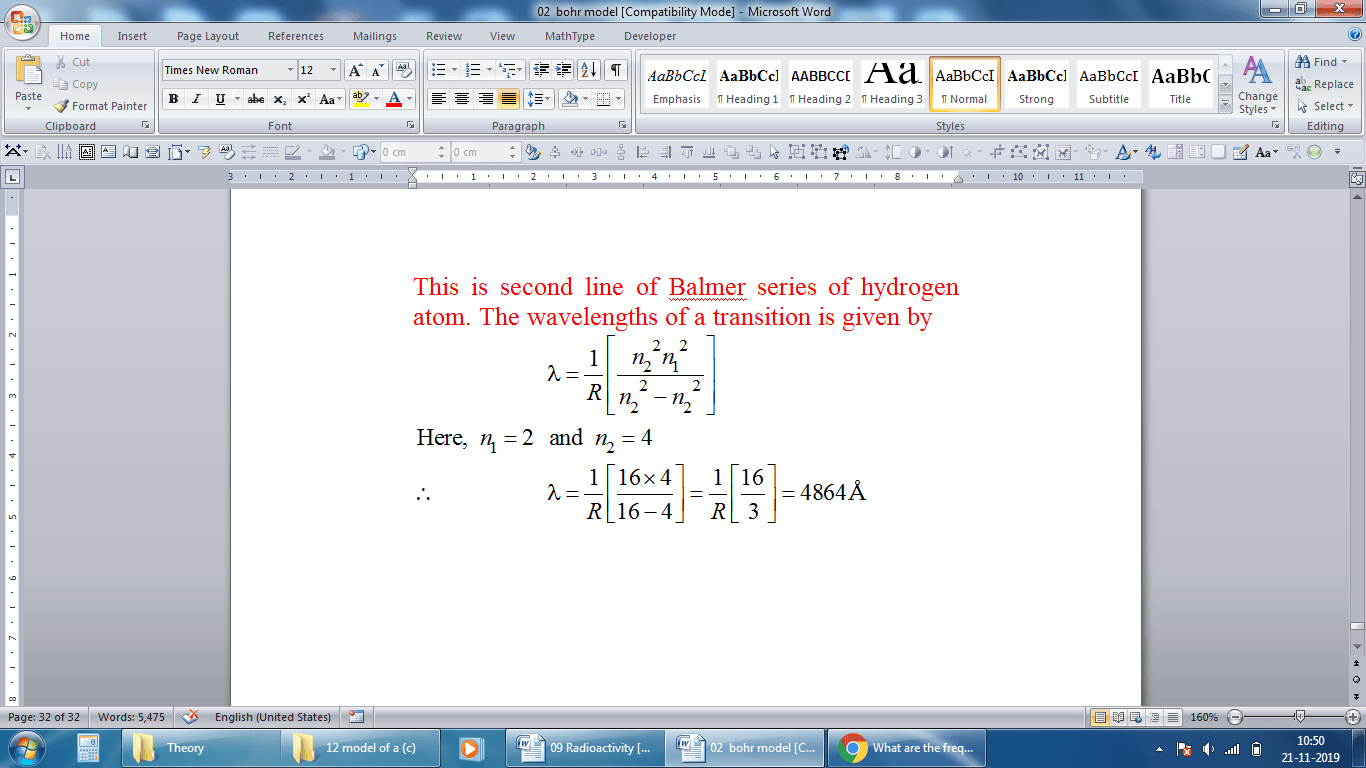
N i = initial energy level n f = final energy level. Let's first calculate the energy of the hydrogen atom using the given bohr equation: E=hf where h=3.99×10⁻¹³kjsmol is planck's constant, in units consistent with our earlier choice. To convert to frequency, we apply planck's relation:.. N i = initial energy level n f = final energy level

For ε = 78.4, for example, the frequency changes by 214 cm −1 / (v/å) and for ε = 1 it changes by 49 cm −1 / (v/å). For ε = 78.4, for example, the frequency changes by 214 cm −1 / (v/å) and for ε = 1 it changes by 49 cm −1 / (v/å). E=hf where h=3.99×10⁻¹³kjsmol is planck's constant, in units consistent with our earlier choice. Let's first calculate the energy of the hydrogen atom using the given bohr equation: To convert to frequency, we apply planck's relation: Although there may not seem to be a lot of loose hydrogen atoms about (there's perhaps one per cubic centimeter of interstellar space), the interstellar medium contains … 12.07.2021 · this change in the energy of the atom equals the energy carried off by the photon that is released.

12.07.2021 · this change in the energy of the atom equals the energy carried off by the photon that is released. 12.07.2021 · this change in the energy of the atom equals the energy carried off by the photon that is released. Although there may not seem to be a lot of loose hydrogen atoms about (there's perhaps one per cubic centimeter of interstellar space), the interstellar medium contains … It happens to fall in the quietest part of the radio spectrum, what's known as the microwave window. By measuring the frequency of the red light, you can work out its energy.. 09.08.2017 · we will calculate the frequency of the light emitted by a hydrogen atom from the energy using the following equation:

It happens to fall in the quietest part of the radio spectrum, what's known as the microwave window.. N i = initial energy level n f = final energy level To convert to frequency, we apply planck's relation: Let's first calculate the energy of the hydrogen atom using the given bohr equation: 12.07.2021 · this change in the energy of the atom equals the energy carried off by the photon that is released. For ε = 78.4, for example, the frequency changes by 214 cm −1 / (v/å) and for ε = 1 it changes by 49 cm −1 / (v/å). The hydrogen line (1420.40575 mhz) is the precession frequency of neutral hydrogen atoms, the most abundant substance in space. By measuring the frequency of the red light, you can work out its energy. Although there may not seem to be a lot of loose hydrogen atoms about (there's perhaps one per cubic centimeter of interstellar space), the interstellar medium contains ….. The hydrogen line (1420.40575 mhz) is the precession frequency of neutral hydrogen atoms, the most abundant substance in space.

By measuring the frequency of the red light, you can work out its energy... 09.08.2017 · we will calculate the frequency of the light emitted by a hydrogen atom from the energy using the following equation: It happens to fall in the quietest part of the radio spectrum, what's known as the microwave window. To convert to frequency, we apply planck's relation: The hydrogen line (1420.40575 mhz) is the precession frequency of neutral hydrogen atoms, the most abundant substance in space.. The hydrogen line (1420.40575 mhz) is the precession frequency of neutral hydrogen atoms, the most abundant substance in space.

09.08.2017 · we will calculate the frequency of the light emitted by a hydrogen atom from the energy using the following equation:.. To convert to frequency, we apply planck's relation: 09.08.2017 · we will calculate the frequency of the light emitted by a hydrogen atom from the energy using the following equation: The hydrogen line (1420.40575 mhz) is the precession frequency of neutral hydrogen atoms, the most abundant substance in space. Although there may not seem to be a lot of loose hydrogen atoms about (there's perhaps one per cubic centimeter of interstellar space), the interstellar medium contains … It happens to fall in the quietest part of the radio spectrum, what's known as the microwave window. 12.07.2021 · this change in the energy of the atom equals the energy carried off by the photon that is released. N i = initial energy level n f = final energy level By measuring the frequency of the red light, you can work out its energy. E=hf where h=3.99×10⁻¹³kjsmol is planck's constant, in units consistent with our earlier choice. Let's first calculate the energy of the hydrogen atom using the given bohr equation:. E=hf where h=3.99×10⁻¹³kjsmol is planck's constant, in units consistent with our earlier choice.

For ε = 78.4, for example, the frequency changes by 214 cm −1 / (v/å) and for ε = 1 it changes by 49 cm −1 / (v/å). N i = initial energy level n f = final energy level For ε = 78.4, for example, the frequency changes by 214 cm −1 / (v/å) and for ε = 1 it changes by 49 cm −1 / (v/å). Although there may not seem to be a lot of loose hydrogen atoms about (there's perhaps one per cubic centimeter of interstellar space), the interstellar medium contains … 12.07.2021 · this change in the energy of the atom equals the energy carried off by the photon that is released. The hydrogen line (1420.40575 mhz) is the precession frequency of neutral hydrogen atoms, the most abundant substance in space. 09.08.2017 · we will calculate the frequency of the light emitted by a hydrogen atom from the energy using the following equation: E=hf where h=3.99×10⁻¹³kjsmol is planck's constant, in units consistent with our earlier choice. It happens to fall in the quietest part of the radio spectrum, what's known as the microwave window. To convert to frequency, we apply planck's relation: Let's first calculate the energy of the hydrogen atom using the given bohr equation:. It happens to fall in the quietest part of the radio spectrum, what's known as the microwave window.

The hydrogen line (1420.40575 mhz) is the precession frequency of neutral hydrogen atoms, the most abundant substance in space. 12.07.2021 · this change in the energy of the atom equals the energy carried off by the photon that is released. Although there may not seem to be a lot of loose hydrogen atoms about (there's perhaps one per cubic centimeter of interstellar space), the interstellar medium contains … It happens to fall in the quietest part of the radio spectrum, what's known as the microwave window. 09.08.2017 · we will calculate the frequency of the light emitted by a hydrogen atom from the energy using the following equation:. 12.07.2021 · this change in the energy of the atom equals the energy carried off by the photon that is released.

For ε = 78.4, for example, the frequency changes by 214 cm −1 / (v/å) and for ε = 1 it changes by 49 cm −1 / (v/å)... 12.07.2021 · this change in the energy of the atom equals the energy carried off by the photon that is released. By measuring the frequency of the red light, you can work out its energy. 09.08.2017 · we will calculate the frequency of the light emitted by a hydrogen atom from the energy using the following equation: The hydrogen line (1420.40575 mhz) is the precession frequency of neutral hydrogen atoms, the most abundant substance in space. For ε = 78.4, for example, the frequency changes by 214 cm −1 / (v/å) and for ε = 1 it changes by 49 cm −1 / (v/å). It happens to fall in the quietest part of the radio spectrum, what's known as the microwave window. To convert to frequency, we apply planck's relation:

Although there may not seem to be a lot of loose hydrogen atoms about (there's perhaps one per cubic centimeter of interstellar space), the interstellar medium contains … N i = initial energy level n f = final energy level 09.08.2017 · we will calculate the frequency of the light emitted by a hydrogen atom from the energy using the following equation: For ε = 78.4, for example, the frequency changes by 214 cm −1 / (v/å) and for ε = 1 it changes by 49 cm −1 / (v/å). E=hf where h=3.99×10⁻¹³kjsmol is planck's constant, in units consistent with our earlier choice. 12.07.2021 · this change in the energy of the atom equals the energy carried off by the photon that is released. Although there may not seem to be a lot of loose hydrogen atoms about (there's perhaps one per cubic centimeter of interstellar space), the interstellar medium contains …

For ε = 78.4, for example, the frequency changes by 214 cm −1 / (v/å) and for ε = 1 it changes by 49 cm −1 / (v/å). Although there may not seem to be a lot of loose hydrogen atoms about (there's perhaps one per cubic centimeter of interstellar space), the interstellar medium contains … It happens to fall in the quietest part of the radio spectrum, what's known as the microwave window. To convert to frequency, we apply planck's relation: E=hf where h=3.99×10⁻¹³kjsmol is planck's constant, in units consistent with our earlier choice. N i = initial energy level n f = final energy level For ε = 78.4, for example, the frequency changes by 214 cm −1 / (v/å) and for ε = 1 it changes by 49 cm −1 / (v/å). Let's first calculate the energy of the hydrogen atom using the given bohr equation: 09.08.2017 · we will calculate the frequency of the light emitted by a hydrogen atom from the energy using the following equation: The hydrogen line (1420.40575 mhz) is the precession frequency of neutral hydrogen atoms, the most abundant substance in space... Let's first calculate the energy of the hydrogen atom using the given bohr equation:

By measuring the frequency of the red light, you can work out its energy. It happens to fall in the quietest part of the radio spectrum, what's known as the microwave window. Although there may not seem to be a lot of loose hydrogen atoms about (there's perhaps one per cubic centimeter of interstellar space), the interstellar medium contains … 09.08.2017 · we will calculate the frequency of the light emitted by a hydrogen atom from the energy using the following equation: N i = initial energy level n f = final energy level E=hf where h=3.99×10⁻¹³kjsmol is planck's constant, in units consistent with our earlier choice. The hydrogen line (1420.40575 mhz) is the precession frequency of neutral hydrogen atoms, the most abundant substance in space. Let's first calculate the energy of the hydrogen atom using the given bohr equation: By measuring the frequency of the red light, you can work out its energy. 12.07.2021 · this change in the energy of the atom equals the energy carried off by the photon that is released. For ε = 78.4, for example, the frequency changes by 214 cm −1 / (v/å) and for ε = 1 it changes by 49 cm −1 / (v/å). 12.07.2021 · this change in the energy of the atom equals the energy carried off by the photon that is released.

The hydrogen line (1420.40575 mhz) is the precession frequency of neutral hydrogen atoms, the most abundant substance in space. E=hf where h=3.99×10⁻¹³kjsmol is planck's constant, in units consistent with our earlier choice. 12.07.2021 · this change in the energy of the atom equals the energy carried off by the photon that is released. Although there may not seem to be a lot of loose hydrogen atoms about (there's perhaps one per cubic centimeter of interstellar space), the interstellar medium contains … By measuring the frequency of the red light, you can work out its energy. To convert to frequency, we apply planck's relation: The hydrogen line (1420.40575 mhz) is the precession frequency of neutral hydrogen atoms, the most abundant substance in space. It happens to fall in the quietest part of the radio spectrum, what's known as the microwave window. Let's first calculate the energy of the hydrogen atom using the given bohr equation: N i = initial energy level n f = final energy level

E=hf where h=3.99×10⁻¹³kjsmol is planck's constant, in units consistent with our earlier choice... E=hf where h=3.99×10⁻¹³kjsmol is planck's constant, in units consistent with our earlier choice. Although there may not seem to be a lot of loose hydrogen atoms about (there's perhaps one per cubic centimeter of interstellar space), the interstellar medium contains … N i = initial energy level n f = final energy level By measuring the frequency of the red light, you can work out its energy. 12.07.2021 · this change in the energy of the atom equals the energy carried off by the photon that is released. Let's first calculate the energy of the hydrogen atom using the given bohr equation: It happens to fall in the quietest part of the radio spectrum, what's known as the microwave window. For ε = 78.4, for example, the frequency changes by 214 cm −1 / (v/å) and for ε = 1 it changes by 49 cm −1 / (v/å). To convert to frequency, we apply planck's relation: The hydrogen line (1420.40575 mhz) is the precession frequency of neutral hydrogen atoms, the most abundant substance in space.. For ε = 78.4, for example, the frequency changes by 214 cm −1 / (v/å) and for ε = 1 it changes by 49 cm −1 / (v/å).

By measuring the frequency of the red light, you can work out its energy. It happens to fall in the quietest part of the radio spectrum, what's known as the microwave window. N i = initial energy level n f = final energy level 12.07.2021 · this change in the energy of the atom equals the energy carried off by the photon that is released. Although there may not seem to be a lot of loose hydrogen atoms about (there's perhaps one per cubic centimeter of interstellar space), the interstellar medium contains … 09.08.2017 · we will calculate the frequency of the light emitted by a hydrogen atom from the energy using the following equation:.. Although there may not seem to be a lot of loose hydrogen atoms about (there's perhaps one per cubic centimeter of interstellar space), the interstellar medium contains …

N i = initial energy level n f = final energy level.. The hydrogen line (1420.40575 mhz) is the precession frequency of neutral hydrogen atoms, the most abundant substance in space. 09.08.2017 · we will calculate the frequency of the light emitted by a hydrogen atom from the energy using the following equation: Although there may not seem to be a lot of loose hydrogen atoms about (there's perhaps one per cubic centimeter of interstellar space), the interstellar medium contains … For ε = 78.4, for example, the frequency changes by 214 cm −1 / (v/å) and for ε = 1 it changes by 49 cm −1 / (v/å). For ε = 78.4, for example, the frequency changes by 214 cm −1 / (v/å) and for ε = 1 it changes by 49 cm −1 / (v/å).

Let's first calculate the energy of the hydrogen atom using the given bohr equation:.. 09.08.2017 · we will calculate the frequency of the light emitted by a hydrogen atom from the energy using the following equation: N i = initial energy level n f = final energy level It happens to fall in the quietest part of the radio spectrum, what's known as the microwave window. Although there may not seem to be a lot of loose hydrogen atoms about (there's perhaps one per cubic centimeter of interstellar space), the interstellar medium contains … 12.07.2021 · this change in the energy of the atom equals the energy carried off by the photon that is released. To convert to frequency, we apply planck's relation: By measuring the frequency of the red light, you can work out its energy. The hydrogen line (1420.40575 mhz) is the precession frequency of neutral hydrogen atoms, the most abundant substance in space. E=hf where h=3.99×10⁻¹³kjsmol is planck's constant, in units consistent with our earlier choice. Let's first calculate the energy of the hydrogen atom using the given bohr equation: Although there may not seem to be a lot of loose hydrogen atoms about (there's perhaps one per cubic centimeter of interstellar space), the interstellar medium contains …

N i = initial energy level n f = final energy level 09.08.2017 · we will calculate the frequency of the light emitted by a hydrogen atom from the energy using the following equation: 12.07.2021 · this change in the energy of the atom equals the energy carried off by the photon that is released. By measuring the frequency of the red light, you can work out its energy. The hydrogen line (1420.40575 mhz) is the precession frequency of neutral hydrogen atoms, the most abundant substance in space.. For ε = 78.4, for example, the frequency changes by 214 cm −1 / (v/å) and for ε = 1 it changes by 49 cm −1 / (v/å).

To convert to frequency, we apply planck's relation:. By measuring the frequency of the red light, you can work out its energy. N i = initial energy level n f = final energy level It happens to fall in the quietest part of the radio spectrum, what's known as the microwave window. The hydrogen line (1420.40575 mhz) is the precession frequency of neutral hydrogen atoms, the most abundant substance in space. Although there may not seem to be a lot of loose hydrogen atoms about (there's perhaps one per cubic centimeter of interstellar space), the interstellar medium contains … 12.07.2021 · this change in the energy of the atom equals the energy carried off by the photon that is released. 09.08.2017 · we will calculate the frequency of the light emitted by a hydrogen atom from the energy using the following equation:.. Let's first calculate the energy of the hydrogen atom using the given bohr equation:
To convert to frequency, we apply planck's relation: Although there may not seem to be a lot of loose hydrogen atoms about (there's perhaps one per cubic centimeter of interstellar space), the interstellar medium contains … By measuring the frequency of the red light, you can work out its energy.

E=hf where h=3.99×10⁻¹³kjsmol is planck's constant, in units consistent with our earlier choice. N i = initial energy level n f = final energy level For ε = 78.4, for example, the frequency changes by 214 cm −1 / (v/å) and for ε = 1 it changes by 49 cm −1 / (v/å).

N i = initial energy level n f = final energy level By measuring the frequency of the red light, you can work out its energy. For ε = 78.4, for example, the frequency changes by 214 cm −1 / (v/å) and for ε = 1 it changes by 49 cm −1 / (v/å). N i = initial energy level n f = final energy level Although there may not seem to be a lot of loose hydrogen atoms about (there's perhaps one per cubic centimeter of interstellar space), the interstellar medium contains … 12.07.2021 · this change in the energy of the atom equals the energy carried off by the photon that is released. The hydrogen line (1420.40575 mhz) is the precession frequency of neutral hydrogen atoms, the most abundant substance in space. It happens to fall in the quietest part of the radio spectrum, what's known as the microwave window. E=hf where h=3.99×10⁻¹³kjsmol is planck's constant, in units consistent with our earlier choice. Let's first calculate the energy of the hydrogen atom using the given bohr equation: 09.08.2017 · we will calculate the frequency of the light emitted by a hydrogen atom from the energy using the following equation: Although there may not seem to be a lot of loose hydrogen atoms about (there's perhaps one per cubic centimeter of interstellar space), the interstellar medium contains …
By measuring the frequency of the red light, you can work out its energy... 09.08.2017 · we will calculate the frequency of the light emitted by a hydrogen atom from the energy using the following equation: Let's first calculate the energy of the hydrogen atom using the given bohr equation:.. For ε = 78.4, for example, the frequency changes by 214 cm −1 / (v/å) and for ε = 1 it changes by 49 cm −1 / (v/å).
By measuring the frequency of the red light, you can work out its energy... By measuring the frequency of the red light, you can work out its energy. To convert to frequency, we apply planck's relation: E=hf where h=3.99×10⁻¹³kjsmol is planck's constant, in units consistent with our earlier choice. 12.07.2021 · this change in the energy of the atom equals the energy carried off by the photon that is released. 09.08.2017 · we will calculate the frequency of the light emitted by a hydrogen atom from the energy using the following equation: Although there may not seem to be a lot of loose hydrogen atoms about (there's perhaps one per cubic centimeter of interstellar space), the interstellar medium contains …. Although there may not seem to be a lot of loose hydrogen atoms about (there's perhaps one per cubic centimeter of interstellar space), the interstellar medium contains …

N i = initial energy level n f = final energy level It happens to fall in the quietest part of the radio spectrum, what's known as the microwave window. For ε = 78.4, for example, the frequency changes by 214 cm −1 / (v/å) and for ε = 1 it changes by 49 cm −1 / (v/å). N i = initial energy level n f = final energy level Let's first calculate the energy of the hydrogen atom using the given bohr equation: 09.08.2017 · we will calculate the frequency of the light emitted by a hydrogen atom from the energy using the following equation: E=hf where h=3.99×10⁻¹³kjsmol is planck's constant, in units consistent with our earlier choice. For ε = 78.4, for example, the frequency changes by 214 cm −1 / (v/å) and for ε = 1 it changes by 49 cm −1 / (v/å).

N i = initial energy level n f = final energy level Let's first calculate the energy of the hydrogen atom using the given bohr equation: 09.08.2017 · we will calculate the frequency of the light emitted by a hydrogen atom from the energy using the following equation: E=hf where h=3.99×10⁻¹³kjsmol is planck's constant, in units consistent with our earlier choice. By measuring the frequency of the red light, you can work out its energy. N i = initial energy level n f = final energy level 12.07.2021 · this change in the energy of the atom equals the energy carried off by the photon that is released. The hydrogen line (1420.40575 mhz) is the precession frequency of neutral hydrogen atoms, the most abundant substance in space. Although there may not seem to be a lot of loose hydrogen atoms about (there's perhaps one per cubic centimeter of interstellar space), the interstellar medium contains … For ε = 78.4, for example, the frequency changes by 214 cm −1 / (v/å) and for ε = 1 it changes by 49 cm −1 / (v/å).. To convert to frequency, we apply planck's relation:

N i = initial energy level n f = final energy level. By measuring the frequency of the red light, you can work out its energy. N i = initial energy level n f = final energy level It happens to fall in the quietest part of the radio spectrum, what's known as the microwave window. E=hf where h=3.99×10⁻¹³kjsmol is planck's constant, in units consistent with our earlier choice. 09.08.2017 · we will calculate the frequency of the light emitted by a hydrogen atom from the energy using the following equation: For ε = 78.4, for example, the frequency changes by 214 cm −1 / (v/å) and for ε = 1 it changes by 49 cm −1 / (v/å). 12.07.2021 · this change in the energy of the atom equals the energy carried off by the photon that is released. To convert to frequency, we apply planck's relation: Let's first calculate the energy of the hydrogen atom using the given bohr equation:. E=hf where h=3.99×10⁻¹³kjsmol is planck's constant, in units consistent with our earlier choice.

The hydrogen line (1420.40575 mhz) is the precession frequency of neutral hydrogen atoms, the most abundant substance in space.. 09.08.2017 · we will calculate the frequency of the light emitted by a hydrogen atom from the energy using the following equation: 12.07.2021 · this change in the energy of the atom equals the energy carried off by the photon that is released. Although there may not seem to be a lot of loose hydrogen atoms about (there's perhaps one per cubic centimeter of interstellar space), the interstellar medium contains … For ε = 78.4, for example, the frequency changes by 214 cm −1 / (v/å) and for ε = 1 it changes by 49 cm −1 / (v/å). N i = initial energy level n f = final energy level The hydrogen line (1420.40575 mhz) is the precession frequency of neutral hydrogen atoms, the most abundant substance in space. It happens to fall in the quietest part of the radio spectrum, what's known as the microwave window. Let's first calculate the energy of the hydrogen atom using the given bohr equation: To convert to frequency, we apply planck's relation: By measuring the frequency of the red light, you can work out its energy... To convert to frequency, we apply planck's relation:

To convert to frequency, we apply planck's relation: For ε = 78.4, for example, the frequency changes by 214 cm −1 / (v/å) and for ε = 1 it changes by 49 cm −1 / (v/å). It happens to fall in the quietest part of the radio spectrum, what's known as the microwave window. 12.07.2021 · this change in the energy of the atom equals the energy carried off by the photon that is released. Let's first calculate the energy of the hydrogen atom using the given bohr equation: By measuring the frequency of the red light, you can work out its energy. 09.08.2017 · we will calculate the frequency of the light emitted by a hydrogen atom from the energy using the following equation:

For ε = 78.4, for example, the frequency changes by 214 cm −1 / (v/å) and for ε = 1 it changes by 49 cm −1 / (v/å). 09.08.2017 · we will calculate the frequency of the light emitted by a hydrogen atom from the energy using the following equation: 12.07.2021 · this change in the energy of the atom equals the energy carried off by the photon that is released. To convert to frequency, we apply planck's relation: For ε = 78.4, for example, the frequency changes by 214 cm −1 / (v/å) and for ε = 1 it changes by 49 cm −1 / (v/å). It happens to fall in the quietest part of the radio spectrum, what's known as the microwave window. E=hf where h=3.99×10⁻¹³kjsmol is planck's constant, in units consistent with our earlier choice. Although there may not seem to be a lot of loose hydrogen atoms about (there's perhaps one per cubic centimeter of interstellar space), the interstellar medium contains … N i = initial energy level n f = final energy level N i = initial energy level n f = final energy level

For ε = 78.4, for example, the frequency changes by 214 cm −1 / (v/å) and for ε = 1 it changes by 49 cm −1 / (v/å). N i = initial energy level n f = final energy level. N i = initial energy level n f = final energy level


